From Dashboards to Decisions: Why Most Nigerian SMEs Are Drowning in Data but Starving for Insight
Walk into almost any growing business in Lagos, Ibadan, or Abuja today and you'll find some version of a data setup. A POS system tracking sales. A CRM logging customer contacts. Social media analytics showing reach and engagement. Maybe even a fancy dashboard someone built in Power BI or Looker Studio.
And yet, ask the person running that business what decision they made last month because of that data, and you'll often get silence.
This is the gap nobody talks about enough. Collecting data has become easy. Understanding it, trusting it, and acting on it has not.
The dashboard trap
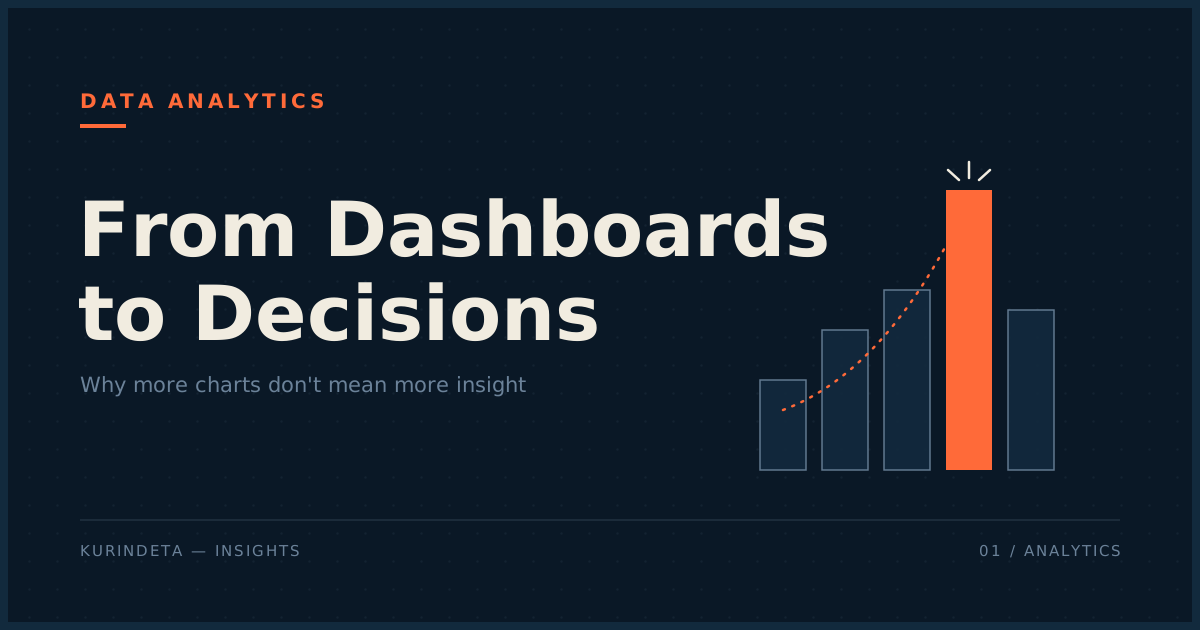
A lot of businesses assume that once the dashboard exists, the problem is solved. The numbers are visible, so surely insight will follow. In practice, a dashboard is just a mirror. It reflects what happened. It rarely tells you why it happened or what to do next.
We've seen this pattern repeatedly: a business owner proudly shows off a beautifully designed dashboard, full of charts and KPIs, but when you ask a simple question like "why did sales drop in March," nobody can answer without another two weeks of digging through spreadsheets.
That's not a data problem. That's an analytics literacy problem.
Why this is getting worse, not better
Ironically, the explosion of accessible tools has made this issue more common, not less. Ten years ago, only large companies with dedicated analysts had dashboards. Now, any small business can plug their sales data into a free tool and generate charts in minutes.
But generating a chart and generating insight are two very different skills. The tools got democratized. The thinking behind them didn't.
Add to this the rise of AI-powered "insights" features baked into every SaaS tool now, and you get a dangerous illusion: businesses feel data-driven because software is telling them things, without anyone on the team actually knowing how to question, verify, or interpret those outputs.
What actual data maturity looks like
Real analytics capability isn't about having more tools. It's about a few basic habits:
Knowing what question you're actually trying to answer before you open a spreadsheet. Most people jump straight to "let's look at the numbers" without being clear on what decision the numbers are meant to inform.
Understanding your own data's limitations. If your POS data doesn't capture returning customers properly, no dashboard will fix that. Garbage in still means garbage out, no matter how good the visualization looks.
Building a habit of checking data against reality. If a report says revenue doubled but nothing changed in the business, someone needs to be suspicious enough to dig deeper rather than celebrate.
Training the people who touch the data, not just buying tools for them. A CRM in the hands of someone who understands basic segmentation is worth more than an expensive BI platform used by someone who doesn't know what a pivot table does.
The real opportunity here
For Nigerian SMEs specifically, this represents a genuine competitive edge waiting to be claimed. Most competitors are stuck at the "we have a dashboard" stage. Businesses that invest in actually building analytics thinking within their teams, not just their software stack, will make faster, better decisions while everyone else is still admiring their charts.
This doesn't require a data science department. It requires deliberate, practical training that connects the numbers people already have to the decisions they're already trying to make. That's a much smaller lift than most business owners assume, and the payoff shows up fast, in fewer guesses and more confident calls.
The businesses that figure this out in the next few years won't just have prettier reports. They'll simply make better decisions, faster, with less second-guessing. That's the actual value of data. Everything else is decoration.

Ready to transform your business?
Let's discuss how our expert Data Analytics solutions can drive measurable growth for your organization.
Schedule a Consultation