The Human Glitch: Why Imperfect Branding Is Beating AI Polish in 2026

Spend enough time scrolling through new logo launches this year and you'll start to notice the same shape over and over: a smooth, glowing, slightly abstract circle or blob, competent, symmetrical, and utterly forgettable. Design critics have started calling it the "AI butthole logo," a blunt name for a real problem, according to coverage from Fast Company on how leading design studios are reacting to it.
It's a funny label for a genuinely serious business issue. When every brand's visual identity converges toward the same safe, algorithmically-smoothed output, distinctiveness, the entire point of branding, quietly disappears. And the data suggests customers have noticed.
The trust deficit is real, and it's measurable
According to research cited by Inkbot Design, 88 percent of consumers now believe most brand messaging fails to reflect the values a company actually claims to hold. At the same time, the same research found that 64 percent of people say they're willing to pay a premium for brands they perceive as "authentically human," even as the global digital advertising market has grown to an estimated 786 billion dollars.
Put those two numbers together and you get a fairly stark picture: businesses are spending more than ever to reach people, while those same people trust what they're seeing less than ever. That gap is exactly where a real opportunity sits for brands willing to look and sound like they were actually made by someone, rather than generated.
What "the human glitch" actually looks like
The response taking shape across the design industry isn't a rejection of AI tools themselves, but a deliberate move away from the flawless, generic outputs those tools default to. Design consultancy analysis published by Inkbot Design frames this as "human-provenance signals": deliberate imperfections, hand-drawn elements, and irregular textures that function as visible proof a real person was behind the work.
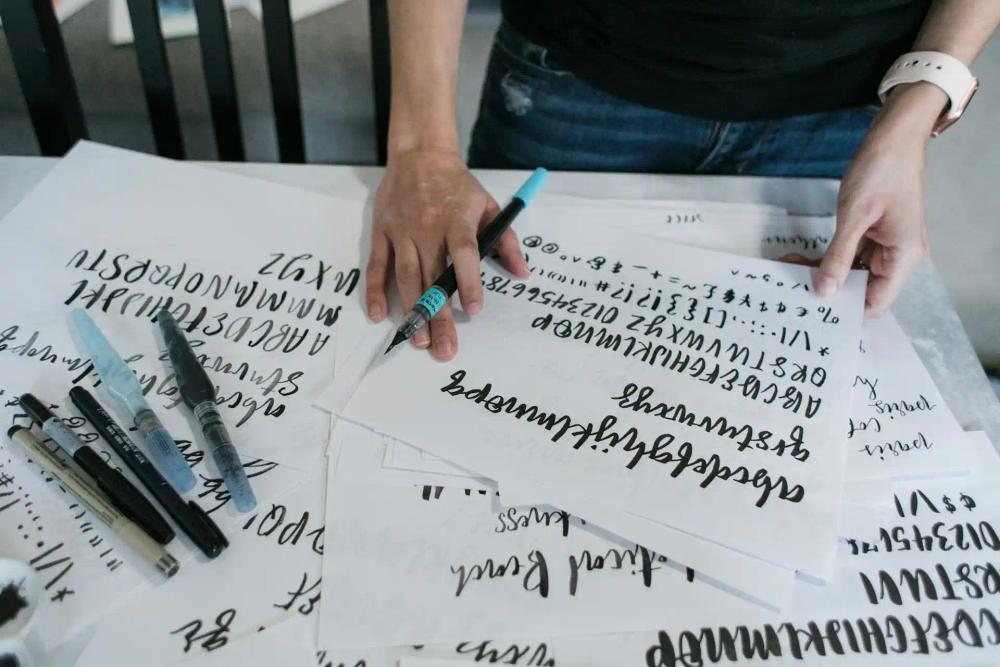
This shows up in concrete ways. Hand-lettered typography instead of a perfectly kerned geometric sans. Lo-fi, unpolished photography instead of an ultra-smooth stock image or AI-generated render. Slightly irregular illustration or layout choices that a generative tool would never produce on its own, because those tools are built to converge on a polished, statistically "safe" average.
Design agency Kota frames the underlying logic sharply in its 2026 trend analysis: the brands that will feel convincing this year are the ones that choose their rough edges on purpose. The goal is for someone encountering the brand to think "someone cared enough to make this," not "someone clicked generate and shipped it."
Crucially, this doesn't mean sloppiness everywhere. The same analysis points out that the imperfection needs to be chosen deliberately, in illustration, photography, or layout, while things like data visualization, product interfaces, and legal or regulated content stay precise and clean. Randomness isn't the goal. Intentional, visible craft is.
Branding is also learning to speak to machines
There's a second, less visible shift happening alongside the aesthetic one. As more people discover brands through AI tools and assistants rather than direct search, branding is starting to account for how machines read an identity, not just how humans see it.
Design strategists are calling this Generative Engine Optimization, structuring a brand's visual and written identity with clear, machine-readable signals, proper entity markup, and consistent naming and description across platforms, so that AI systems recommending products or services can identify and represent a brand accurately, according to Inkbot Design's branding trends coverage. This connects directly to the same shift we've covered on the web development side: as AI answer engines increasingly mediate discovery, a brand's digital footprint needs to be legible to both people and machines at once.
The Branding Journal frames 2026 as defined by three overlapping movements rather than one single look: agentic AI reshaping how branding and marketing work gets done, personal branding shifting away from pure performance toward ownership and real relationships, and visual identity evolving into adaptive systems built around feeling and experience rather than a single static logo, according to its 2026 trend overview.
What this means for building a brand right now
None of this is an argument against using AI tools in the design process. It's an argument about where the thinking has to come from. A logo generated in seconds can still be useful as a starting point or a quick concept test. What it can't replace is the specific, considered decision-making that makes an identity feel like it belongs to one particular business and nobody else.
For a business building or refreshing its brand identity this year, the practical takeaway is fairly direct. Resist the pull toward the safest, most polished, most "on-trend" AI-generated option, because safest is exactly what's becoming invisible. Look for the places in your identity where a deliberate human touch, a hand-drawn mark, a specific photographic choice, an unexpected colour decision tied to something real about the business, can do work that a generative tool simply won't produce on its own. And keep that human touch load-bearing rather than decorative: it needs to connect to something true about the business, not just look interesting for its own sake.
The irony of this moment is that AI has made generic, competent design essentially free. That's exactly what makes distinctive, considered, human-led branding one of the few things left that's genuinely hard to copy.

Ready to transform your business?
Let's discuss how our expert Branding solutions can drive measurable growth for your organization.
Schedule a Consultation