Strategic Brand Engineering: Why Modern Brand Identity Is a System, Not Just a Logo

When business leaders decide to "rebrand," the conversation almost always starts in the wrong place: “We need a new logo.”
While a visually striking mark is an important asset, a logo alone cannot carry the weight of a modern enterprise. In a crowded digital marketplace, where your audience interacts with your company across search engines, social feeds, web platforms, and automated customer workflows, a brand is not just what you look like.
Your brand is a dynamic operating system. It is the sum total of every visual, textual, and functional interaction a customer has with your business.
Treating branding as a mere cosmetic overlay leads to fragmented customer experiences, weak market positioning, and wasted design budgets. To build lasting market equity, modern businesses must approach branding as an engineered ecosystem.
The Four Pillars of a Modern Brand System
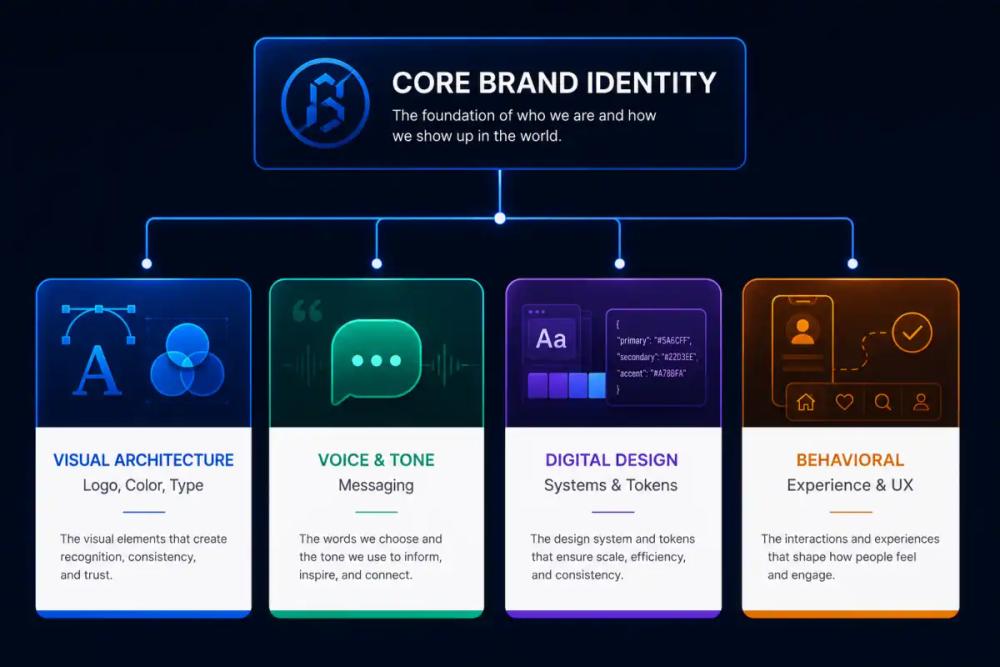
A robust brand identity requires four interconnected layers working in total alignment:
1. Visual Architecture (The Assets)
This is the tangible surface area of your brand: your logo mark, colour palette, typography hierarchy, iconography, and photography direction. A great visual system isn't just aesthetic; it is modular. It scales down gracefully to a 16x16 pixel browser favicon and scales up seamlessly to a highway billboard or enterprise trade show booth.
2. Voice & Messaging (The Narrative)
How your brand speaks determines how it is remembered. Your brand voice defines your tone across all communications, from high-level headline positioning on your homepage to micro-copy on checkout buttons and transactional email notifications. Consistency in tone builds subconscious trust.
3. Digital Design Systems (The Infrastructure)
For modern tech-forward and service-driven brands, your web application or website is your primary brand ambassador. A modern brand identity includes reusable UI components, digital design tokens (standardized spacing, colour variables, animation timing), and accessible design principles that ensure your brand feels identical across every screen size and device.
4. Behavioural Experience (The Delivery)
A brand promise is useless if your operational execution contradicts it. How quickly does your website load? How easy is it for a user to find answers? How are customer support inquiries handled? Operational execution is the ultimate test of brand integrity.
Legacy Branding vs. Modern Brand Systems
Understanding the shift from traditional visual design to digital-first brand engineering is critical for long-term growth:
| Attribute | Legacy Branding (Static) | Modern Brand System (Dynamic) |
|---|---|---|
| Primary Focus | Print materials, stationery, and static logos | Screen-first web platforms, app interfaces, and digital touchpoints |
| Guidelines | Static 100-page PDF brand manuals that sit unread | Living design systems, component libraries, and CSS/code tokens |
| Adaptability | Rigid rules that break on modern digital screens | Flexible frameworks designed for multi-platform responsiveness |
| Customer Touchpoint | One-way visual impression (brochures, ads) | Interactive two-way engagement (UX, performance, micro-animations) |
| Success Metric | Visual consistency in print | User recall, conversion velocity, and digital brand authority |
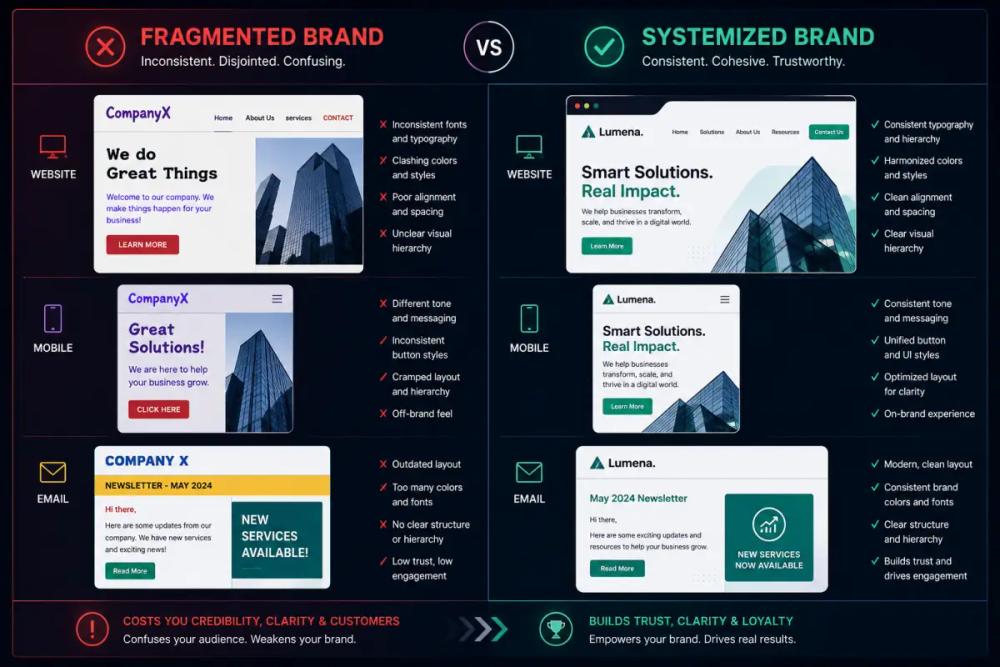
Fragmented visual execution erodes customer trust, while a unified design system reinforces credibility.
3 Reasons Why a Systemized Brand Drives Business Revenue
Investing in a comprehensive brand architecture delivers measurable business outcomes beyond surface-level aesthetics:
1. Radically Reduced Design and Development Debt
When your business lacks a unified design system, every new marketing campaign, landing page, or website feature requires starting from scratch. A engineered brand system provides pre-tested visual patterns and UI components, allowing your team to deploy new digital assets up to 3x faster while maintaining total consistency.
2. Premium Pricing Power
Market perception directly dictates price elasticity. Companies with polished, coherent brand systems command higher price points because their visual and digital presentation projects stability, authority, and enterprise capability. Customers inherently associate high design fidelity with high service quality.
3. Immediate Cognitive Recall and Trust
In an era of shrinking attention spans, visual friction is conversion death. When your colour hierarchy, typography, and messaging align seamlessly across search results, social channels, and your primary web platform, users process your value proposition faster and build brand recall with minimal cognitive effort.
The 4-Step Framework to Engineering Your Brand System
Rebuilding or refining your brand identity requires a structured, step-by-step approach:
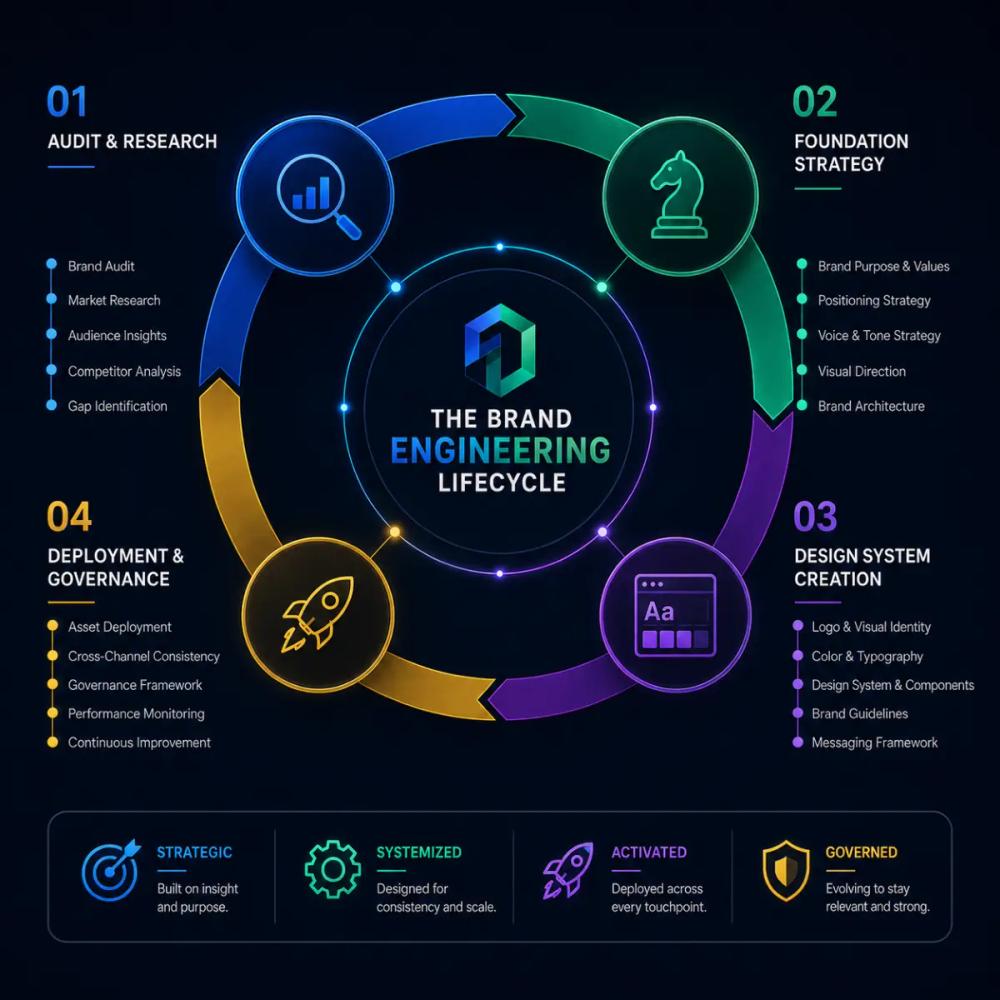
- Perform a Touchpoint Audit: Collect every existing visual asset, deck, webpage, and advertisement. Identify inconsistencies in colours, logos, and messaging across departments.
- Define Your Positioning & Brand Voice: Articulate your core value proposition in one sentence. Define 3-4 brand personality traits and establish clear "We say this / We don't say that" copywriting guardrails.
- Build the Core Visual & UI Assets: Design a scalable mark, select web-accessible typography pairings, establish a functional colour palette (including dark mode variations), and codify reusable UI design tokens.
- Deploy a Living Design System: Document your brand guidelines inside a centralized digital platform (or coded style guide) so developers, marketers, and external agency partners can access assets instantly.
Key Takeaways
- Logos don't build brands; systems do. A logo is simply the signature on a broader brand operating system.
- Consistency builds enterprise value. A unified identity across web, mobile, and marketing collateral reduces friction and increases customer lifetime value.
- Modern branding is digital-first. Design systems must be built for screens, speed, accessibility, and interactive user experiences before print.
- Systemization saves money. Standardizing your design guidelines cuts production time and eliminates costly redesign cycles.
Building a Brand Built to Scale
A great brand identity isn't an expense, it is a long-term asset that compounds in value over time. By moving away from superficial visual tweaks and embracing a structured, digital-first brand system, you transform your company's market presence into an engine for recognition, trust, and sustained revenue growth.


Ready to transform your business?
Let's discuss how our expert Branding solutions can drive measurable growth for your organization.
Schedule a Consultation