Beyond Ticking Boxes: How Modern GRC Drives Business Velocity and Scalable Trust

For decades, Governance, Risk, and Compliance (GRC) suffered from a brand problem. Mention GRC in a board meeting or engineering sync, and people often imagined endless spreadsheets, rigid red tape, and an army of auditors slowing down business momentum. It was seen as an expensive corporate tax, a defensive necessity to avoid fines and lawsuit liability.
However, in today’s hyper-connected, threat-heavy digital ecosystem, that legacy mindset is dangerous.
As enterprise buyers demand rigorous security vetting and regulatory bodies crack down on data privacy, modern GRC has evolved from a defensive chore into a strategic growth engine. When built correctly, a mature GRC framework doesn't slow your organization down, it gives you the operational stability to move faster than your competitors.
Deconstructing the Three Pillars of GRC
To understand why GRC is essential for modern business, we must look beyond the acronym and break down how its three core components work together in real-time operations:
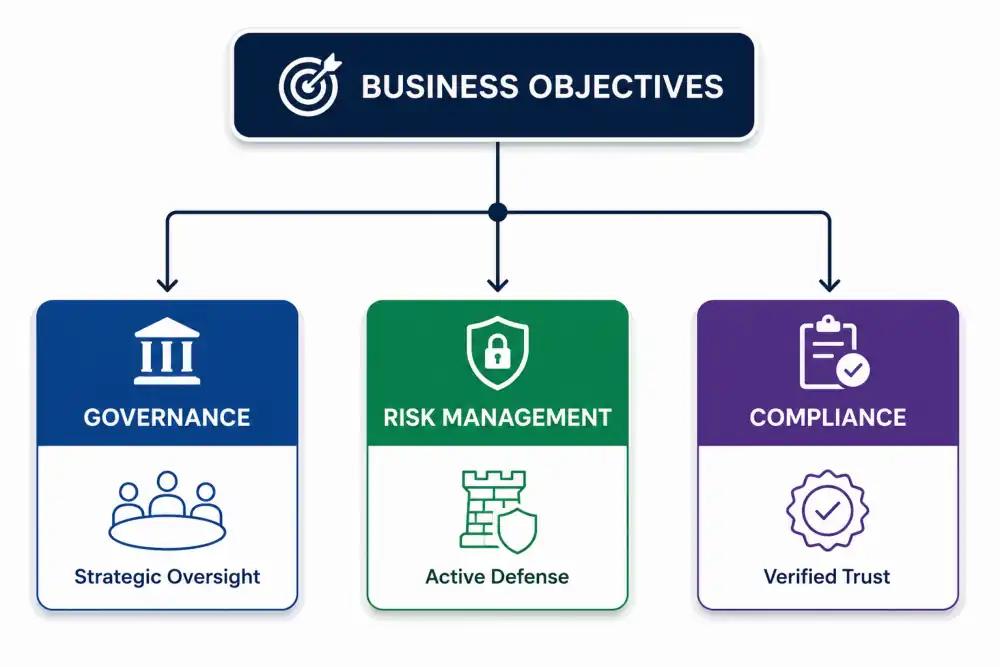
1. Governance: Defining the Rules of Engagement
Governance is the strategic framework that aligns your IT architectures, operational workflows, and data pipelines with overarching business goals. It establishes clear accountability, defines who owns specific digital assets, and sets policies for ethical data handling. Without governance, teams operate in silos, leading to duplicated efforts and unpredictable operational drift.
2. Risk Management: Turning Vulnerabilities into Calculated Strategy
Risk isn't something to avoid entirely; it is something to measure, prioritize, and manage. Modern risk management moves away from annual, point-in-time assessments toward continuous threat modelling. It asks key questions:
- What digital or operational assets are most critical to revenue generation?
- What is the quantifiable impact if a specific infrastructure node goes down or suffers a breach?
- What automated controls can prevent that single point of failure?
3. Compliance: Presenting Irrefutable Proof
Compliance is the tangible proof that your organization practices what it preaches. Whether adhering to global standards like ISO/IEC 27001, SOC 2 Type II, or regulatory mandates like GDPR and regional privacy laws, compliance provides standardized proof to external partners that your environment is hardened and secure.
3 Ways Modern GRC Unlocks Competitive Advantage
Rather than viewing GRC as a cost centre, forward-thinking business leaders leverage GRC infrastructure to generate tangible business value:
1. Accelerating Enterprise Sales Cycles
If you sell software or technical services to enterprise clients, security reviews are often your biggest operational bottleneck. Mid-market and enterprise buyers won't sign vendor contracts without vetting your data governance.
A proactive, audit-ready GRC framework eliminates months of security back-and-forth, allowing sales teams to close enterprise deals up to 50% faster.
2. Safeguarding Enterprise Valuation
A single unmitigated risk can lead to critical data loss, brand damage, or catastrophic regulatory penalties. By integrating continuous risk monitoring into daily operations, companies preserve asset valuation, retain investor trust, and protect shareholder value against unforeseen operational shocks.
3. Fostering a Culture of Decisive Action
When team members know precisely what policies exist, what risk thresholds are acceptable, and where accountabilities lie, they make faster, better-informed choices. True governance creates operational clarity, freeing leadership from micro-managing security protocols.
A Step-by-Step Roadmap to Modernizing Your GRC Strategy
Transitioning from legacy, spreadsheet-heavy compliance to an automated, resilient GRC posture requires a clear roadmap:
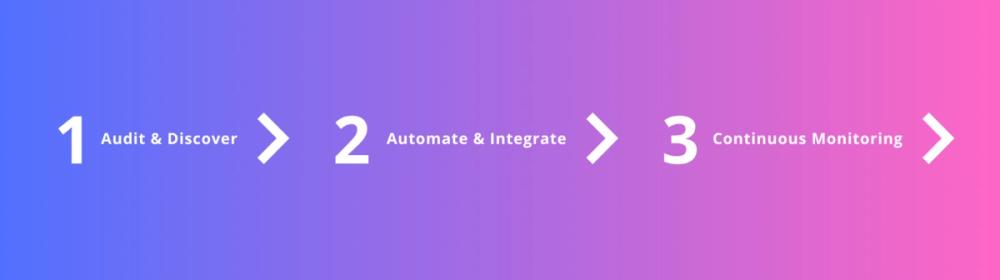
- Conduct a Gap & Asset Audit: Catalogue all digital infrastructure, user access points, data pipelines, and third-party vendor dependencies. Identify where data lives and who controls it.
- Move from Manual to Automated Evidence Collection: Ditch disconnected spreadsheets. Implement compliance automation tools that continuously pull logs from cloud infrastructure, identity providers, and code repositories.
- Embed Policies into Daily Workflows: Compliance shouldn't live in a forgotten PDF. Integrate policy checks directly into software delivery pipelines, employee onboarding modules, and access request workflows.
- Establish a Continuous Monitoring Rhythm: Treat risk assessment as a real-time operational dashboard rather than a yearly audit checklist.
Trust is the Ultimate Business Currency
In the modern digital economy, trust is hard to build and trivial to lose. Buyers don't just evaluate products based on features they buy based on reliability, data security, and long-term business stability. By treating GRC as a dynamic operational architecture, you protect your brand, streamline sales, and build an organization engineered to scale safely.


Ready to transform your business?
Let's discuss how our expert GRC solutions can drive measurable growth for your organization.
Schedule a Consultation