
The Challenge: A Single-Department Fix for a Firm-Wide Problem
Oryx Africa's initial ask was scoped narrowly: upskill the marketing team on social media execution. But a pre-training consulting session with stakeholders exposed a more fundamental issue underneath the skills gap.
- Marketing Couldn't Speak for the Firm Alone: Oryx operates across multiple solution lines, SAP, Microsoft, and its own Oryx products, each with its own subject-matter owners outside the marketing team. Content decisions made in isolation risked misrepresenting the business or missing context only other departments held.
- No Shared Brand Voice Across Stakeholders: Departments outside marketing had never been brought into a conversation about how the firm tells its story, leaving brand consistency dependent on one team's interpretation.
- A Skills Gap That Was Really an Alignment Gap: Teaching social media tactics to marketing alone would have produced better content in isolation, not a firm that could sustain a coherent voice as it scaled.
Kurindeta recommended expanding the scope beyond the original brief: rather than a marketing-only workshop, the training would bring in stakeholders across the firm to build shared ownership of the strategy from day one.
The Strategy: From Content Fundamentals to AI Integration
The resulting program, Marketing on Social Media: From Content Creation to AI Integration, was structured to take a cross-functional room from foundational thinking to production-ready execution in a single, intensive session.
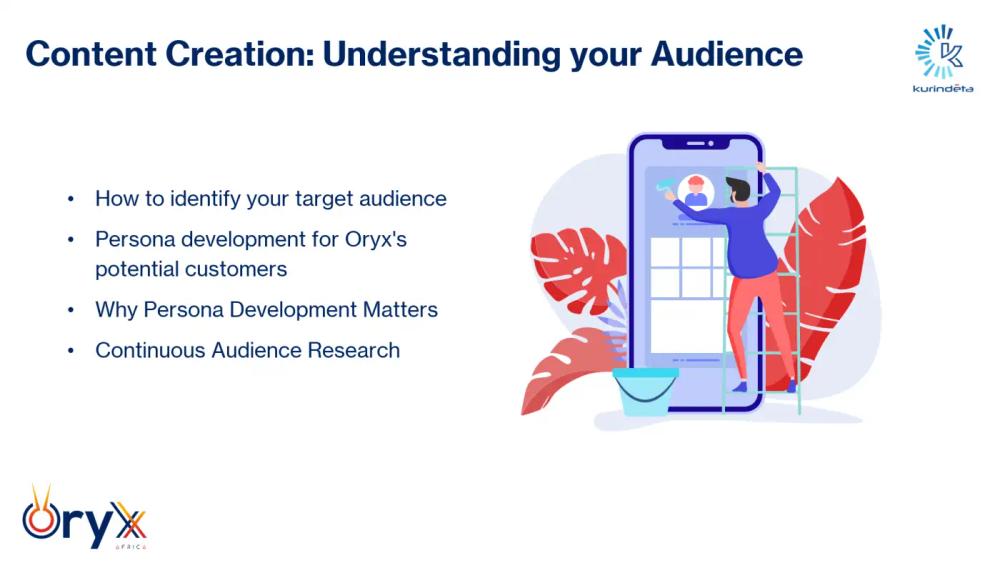
1. Foundations and Audience Understanding
- Establishing why social media marketing matters in the current digital landscape.
- Building a shared understanding of Oryx Africa's audience across its various solution lines.
2. Content Creation and Strategy
- Turning audience insight into content ideas that resonate rather than generic posting.
- Building a content calendar framework tailored to Oryx's social platforms.
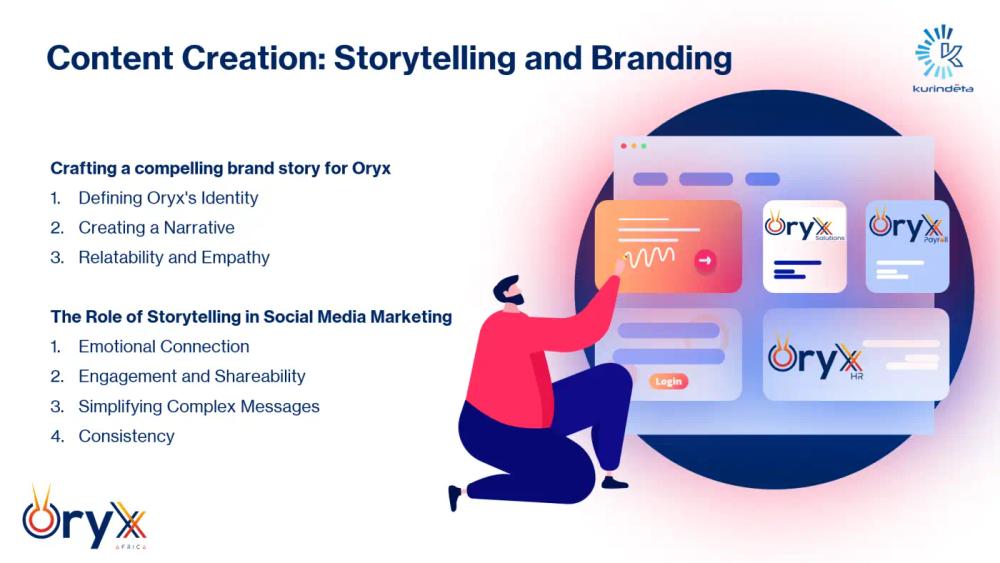
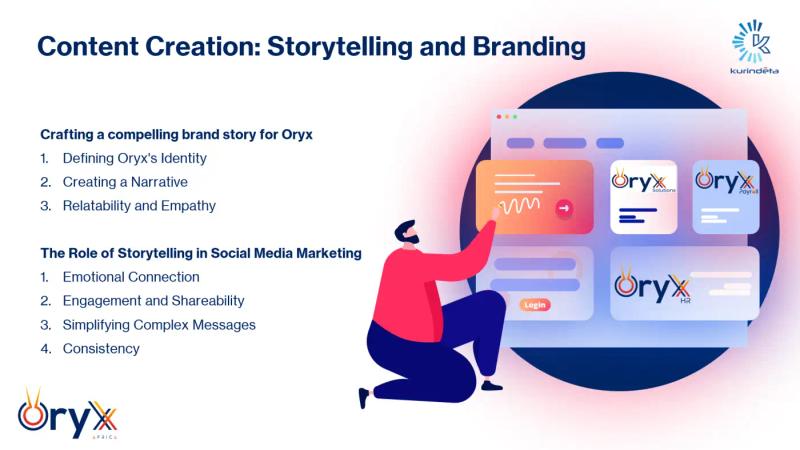
3. Storytelling and Brand Identity
- Crafting a compelling brand narrative for Oryx Africa as a single firm, not a collection of departments.
- Positioning storytelling as the connective layer across every solution line and every audience segment.
4. Design Principles
- Equipping non-designers with the core visual principles needed to keep content on-brand without a designer in every loop.
5. Calls to Action - Strategy and Measurement
- Defining the purpose and different types of CTAs, and where each fits in the funnel.
- Introducing analytics and tracking tools to measure CTA performance, moving the team from guesswork to evidence.
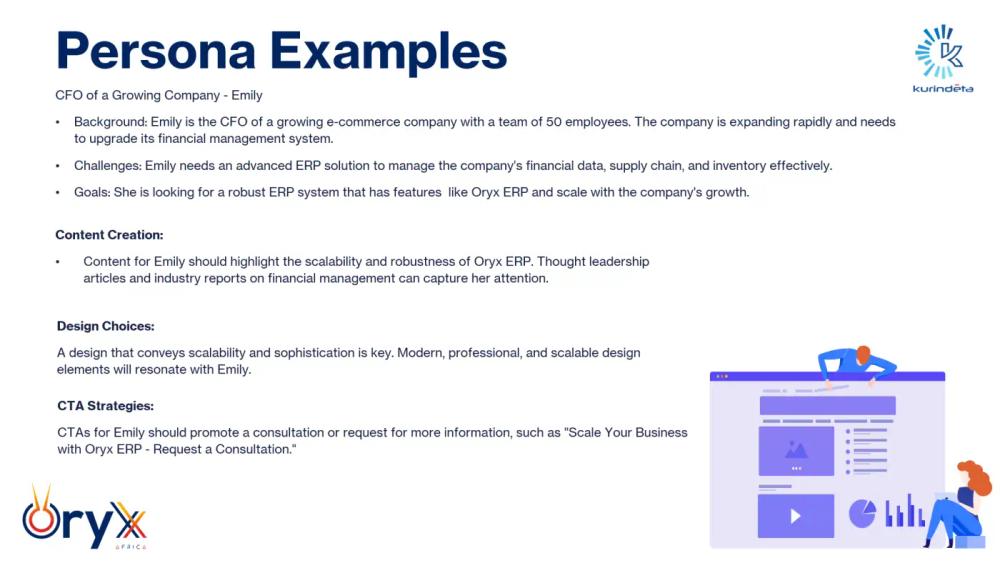
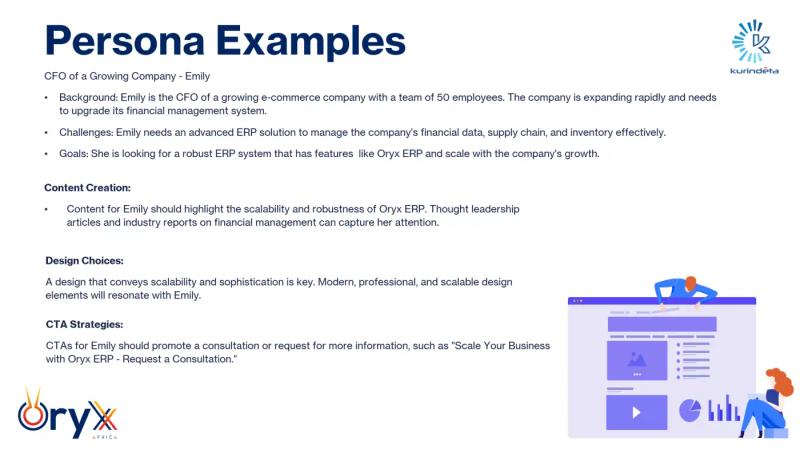
6. Persona Application
- Working through real persona examples to ground every previous module in a concrete audience.
7. AI Integration
- Introducing AI tools into the content production workflow, positioning the team to scale output without scaling headcount.
The Execution: One Room, Every Stakeholder
The format itself carried as much weight as the curriculum. By bringing stakeholders from beyond the marketing department into the same session became a working alignment exercise as much as a training:
- Cross-Departmental Input, Live: Subject-matter context from outside marketing surfaced in real time, sharpening the brand story and content ideas as they were built rather than after the fact.
- Shared Ownership from Day One: Departments that would previously have been asked to "review" marketing's content instead helped shape it, reducing the friction that typically follows a marketing-only rollout.
The Impact & Value Delivered
What began as a marketing skills request became a firm-wide alignment exercise, with stakeholders leaving as co-owners of the strategy rather than downstream reviewers of it.
- A Unified Brand Story: Oryx Africa left the session with a single, agreed-upon narrative framework, rather than a marketing-only interpretation of the brand.
- A Measurable CTA Framework: The team moved from ad hoc calls to action to a structured approach backed by defined tracking and analytics.
- AI-Ready Content Operations: Participants left equipped to fold AI tools directly into their content workflow, positioning the team to produce more without proportionally more effort.
- Cross-Firm Buy-In: By involving stakeholders beyond marketing, the resulting strategy carries organization-wide support — the kind that determines whether a content strategy actually survives past the training day.
Project Gallery
Click any image to view full screen.
Ready to start a similar project?
Let's discuss how our expert Branding solutions can drive measurable growth for your organisation.
Start a Conversation